2026 Top Filling Machine Types for Global Buyers?
Choosing the right filling machine in 2026 requires more than comparing speed, price, and supplier promises. Global buyers must match equipment with product viscosity, container shape, production volume, and hygiene requirements. Water-like liquids may suit an overflow filler, while sauces, creams, oils, and powders often need different dosing methods. Some products also require piston, pump, auger, or gravity filling systems. The details matter.
This guide examines practical filling machines for food, beverage, cosmetic, pharmaceutical, and household chemical applications. It considers filling accuracy, changeover time, cleaning access, control systems, and after-sales support. A machine running 120 containers per minute sounds impressive, but poor bottle handling can create delays and product waste. Real production is messier. Experienced engineers usually test the actual product before recommending a model. That step should not be skipped.
Global buyers should also review stainless-steel grades, sealing quality, electrical compatibility, spare-parts availability, and operator training. A reliable supplier should provide clear specifications, sample tests, maintenance guidance, and documented performance limits. Certifications may support purchasing decisions, but they do not replace factory validation or responsible installation. Buyers need evidence, not attractive brochures alone.
There is no universal best machine. A compact semi-automatic unit may outperform a high-speed line for seasonal products or frequent formula changes. Conversely, large manufacturers may need integrated filling, capping, labeling, and inspection systems. This overview compares major filling machine types with those real conditions in mind, while acknowledging that local standards and product behavior can change the final choice.
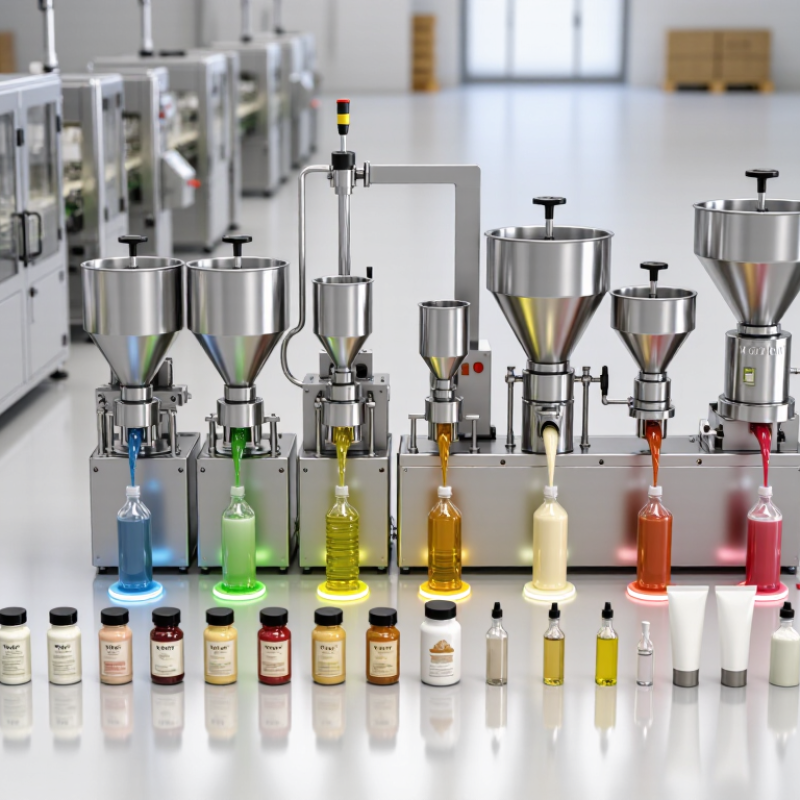
Filling Machine Basics and Their Role in Global Production
2026 Top Filling Machine Types for Global Buyers
Filling machines transfer measured products into bottles, jars, pouches, or cartons. Common types include
piston, pump, gravity, overflow, auger, and net-weight fillers. Each suits a different product behavior. Gravity filling works well with free-flowing liquids, while piston systems handle thicker materials. Auger fillers measure powders through controlled screw rotation. The container matters too.
Fortune Business Insights valued the global filling machines market at about
USD 7.35 billion in 2023. Its report forecasts growth to approximately
USD 10.87 billion by 2032. This expansion reflects demand for accurate dosing, shorter changeovers, and reduced material waste. PMMI’s packaging industry research also identifies labor availability and automation as continuing investment drivers. Still, automation is not a complete answer.
A practical selection begins with
viscosity, foam level, temperature, container shape, and required output.
Operators should test real product samples before approving a machine. Small variations can affect fill accuracy.
Cleaning access deserves equal attention, especially where frequent product changes occur. In production trials, a machine may perform perfectly with water but struggle with syrup or suspended particles. That uncomfortable gap is often overlooked.
Buyers should verify
repeatability, calibration procedures, spare-part availability, and operator training. A lower purchase price can become expensive when adjustments remain manual.
Major Filling Machine Types by Product and Container
Selecting a filling machine starts with the product, not the equipment catalog.
Liquid products commonly use overflow, gravity, piston, or pump fillers. Overflow systems suit water-like liquids and create consistent levels in transparent bottles. Piston fillers handle thicker products, including sauces, creams, and gels. Pump fillers offer better control when viscosity changes during production.
Powders need auger or vacuum filling, while free-flowing granules often require volumetric cups or multihead weighing systems.
Container design changes the decision. Rigid bottles and jars tolerate higher-speed rotary machines. Cans may need precise liquid-level control. Pouches require compact, servo-controlled systems with careful sealing alignment. Tubes need accurate dosing and clean end-sealing. PMMI’s 2024 industry outlook reported continued investment in automation and flexible packaging equipment, reflecting this shift toward adaptable production lines.
Market data also supports careful selection.
Grand View Research estimates the global filling machines market will expand at about 4.8% annually through 2030. However, growth figures can hide practical problems. A machine rated for 120 containers per minute may slow with foamy liquids or uneven powder flow. Real output depends on container shape, product temperature, cleaning routines, and operator skill. This classification helps, but it is not perfect. Trial filling with the actual product and container remains the most reliable test.
How to Match Filling Technology with Production Requirements
Choosing a filling machine in 2026 starts with the product, not the catalog.
Liquid viscosity, container shape, filling accuracy, and daily output determine the suitable technology. Overflow fillers work well for thin liquids when every bottle needs the same visual level. Piston fillers handle thicker materials, such as sauces or creams, with controlled volume. Peristaltic systems can reduce product contact and support cleaner changeovers. Powder products often require auger or vacuum filling, depending on density and flow behavior.
Production speed matters, but it should not dominate the decision. A machine running quickly may create more waste, foaming, or maintenance work. Test the actual product at its operating temperature. Small differences in temperature can change viscosity and filling time. Ask for documented accuracy results, cleaning procedures, spare-part availability, and operator training. These details often reveal more than an impressive speed figure. My practical view is simple: laboratory tests are useful, but they do not perfectly represent a dusty factory floor or a tired night shift.
Tips: Match the filler to your container range, not only your current bottle. Request sample trials with real materials. Check whether tools can be changed without stopping the whole line. Leave capacity for future growth, but avoid paying for unused complexity. A flexible semi-automatic machine may be wiser than a fully automatic line for unstable demand. Also review local electrical standards and safety requirements before installation.
Key Features, Standards, and Automation Trends in 2026
2026 Top Filling Machine Types for Global Buyers
In 2026, filling equipment will be judged by accuracy, hygiene, and changeover speed. Piston fillers suit viscous products, while gravity and overflow systems handle thin liquids. Peristaltic pumps reduce product contact and support smaller batches. Auger fillers remain practical for powders, but dust control requires careful enclosure design.
Automation is moving beyond basic speed. The International Federation of Robotics reported 542,076 industrial robot installations in 2023, a 10% annual increase. This trend supports robotic container handling, vision inspection, and automatic reject systems around filling lines. PMMI industry reports also identify labor availability, flexible packaging formats, and data visibility as major investment drivers. Buyers should request electronic batch records, recipe controls, and traceable calibration data. Compatibility with 21 CFR Part 11, ISO 22000 procedures, and hygienic design guidance can simplify audits. Still, compliance depends on the complete system, not one certificate.
Tips: Test the real product at production temperature. Measure fill variation across the smallest and largest container. Ask for cleaning-time records, not only brochure speeds. A fast line is not always better. Many projects underestimate changeover waste. That mistake deserves more attention. Also review compressed-air use, sensor access, and operator training before signing specifications. A supplier should explain failure modes clearly, including what happens during a power loss or network interruption. Perhaps the best 2026 machine is not the most automated one, but the one operators can control, clean, and verify every shift.
Global Buying Factors: Cost, Compliance, Service, and Supply Chain
In 2026, global buyers are comparing rotary, inline, piston, and peristaltic filling machines. The best choice depends less on speed than on product behavior, factory layout, and local support. Thick cream may need piston control, while thin liquid often suits an overflow or inline system. Request test videos using your actual container, cap, and formula. A polished demonstration can hide setup difficulties. This matters.
Purchase price is only one cost. Include change parts, air consumption, cleaning time, training, spare parts, shipping, duties, and downtime. Ask for a five-year cost model with realistic production hours. Compliance also needs evidence. Check electrical standards, hygienic design, guarding, documentation, and product-contact materials. Requirements differ by destination, so use an independent inspector when uncertainty remains. Do not accept vague certificates. They can delay approval.
Service should be measurable. Confirm response times, remote diagnosis, technician availability, language coverage, and regional spare-part stock. Ask how faults are logged and corrective actions are verified. For supply-chain resilience, review lead times for pumps, sensors, seals, and control components. Dual-source critical parts where practical. Keep wear parts on site. I have seen buyers save on equipment, then lose weeks waiting for one seal. The cheaper quote was not cheaper.
2026 Top Filling Machine Types for Global Buyers
Global buying factors: cost, compliance, serviceability, and supply-chain availability
The benchmark uses a 0–100 procurement index, where 100 represents the strongest position for global buyers. Scores reflect common industry characteristics: rotary and linear machines generally provide higher output and compliance potential, while piston and peristaltic systems are often more accessible for lower-volume operations. Actual results vary by product, container format, automation level, and destination-market requirements.