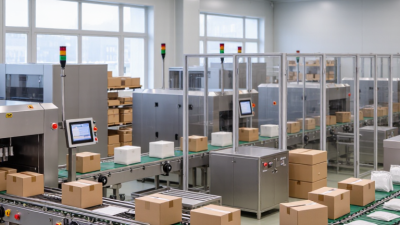
How to Choose Packaging Machinery in 2026
Choosing packaging machinery in 2026 is less about buying the fastest line and more about finding equipment that fits the work. A filler may look impressive in a showroom; on your floor, changeover time, cleaning access, and product variation matter just as much. Small details count.
PMMI’s 2023 State of the Industry report estimated U.S. packaging machinery shipments at $10.9 billion in 2022 and projected $11.3 billion for 2023. That growth points to an active market, not a guarantee that every investment will pay off. Buyers still need to test machine performance against real products, staffing plans, service support, and expected production volumes. Ask for trial results, not only brochure speeds.
For an expert perspective, Jorge Izquierdo, PMMI’s vice president of market development, is a useful industry voice. A practical paraphrase of the buying principle relevant to his market-development work is: “Choose automation around a measurable production need.” This is a paraphrase, not a verified verbatim quotation. That distinction matters; procurement advice should be traceable, not dressed up as a quote.
The chapters ahead examine capacity, flexibility, integration, sanitation, total cost, and supplier support. They also ask an uncomfortable question: will the line still suit your products in three years? Forecasts can miss. A careful buyer checks assumptions, speaks with operators, and leaves room for what the spreadsheet cannot predict.
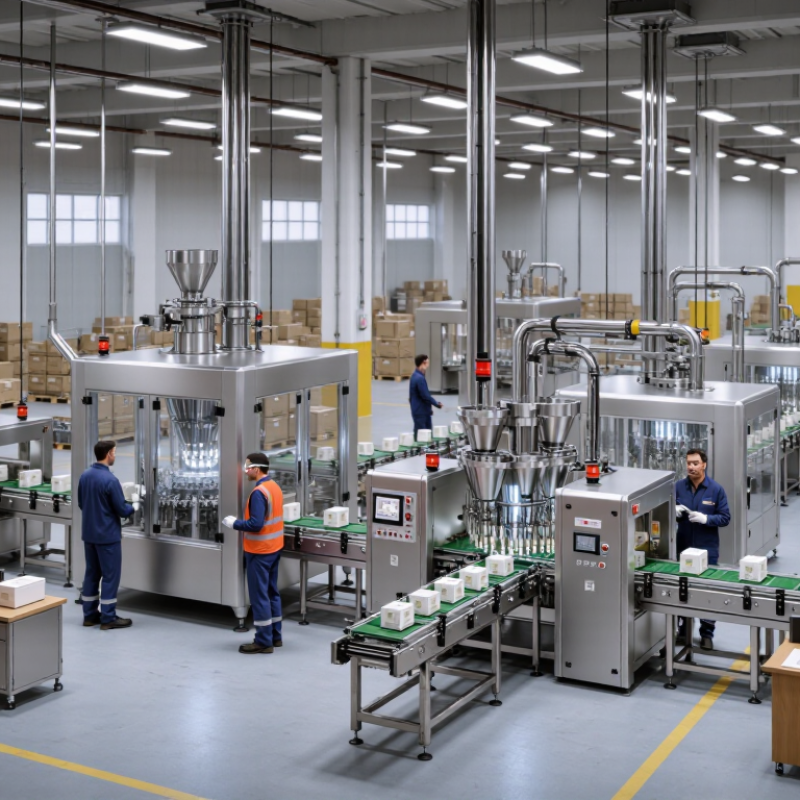
Define Production Needs and Packaging Requirements
Before comparing packaging machinery, map the product, package, and daily production target. Record units per shift, peak-hour demand, changeover frequency, and expected growth. Averages can hide the real constraint. Measure the busiest hour, not just the monthly total. Note whether products arrive warm, dusty, fragile, or uneven in size; each condition can affect feeding, sealing, and reject rates. Keep it measurable.
Define package details precisely: material, dimensions, closure, label position, and acceptable seal strength. Bring actual samples, including imperfect ones.
Small details matter. A slightly warped tray may behave differently from a perfect sample. Specify the smallest and largest formats, since one machine setting rarely covers every variation without trade-offs.
Identify required checks, such as weight verification, date coding, or leak testing, and decide where they belong in the line.
Consider operators, floor space, utilities, and cleaning routines alongside speed. A quoted rate is useful only if it matches your product and allows for realistic stops for replenishment and sanitation. Ask for a trial using your materials and target formats. Watch for jams, adjustment time, and changeover steps. Not every detail will be known at the start. Record assumptions, assign someone to verify them, and leave room for a requirement you may have overlooked.
Identify Suitable Packaging Machine Types
Choose machinery from the package outward. A liquid in a rigid bottle may need a filler, capper, and labeler. A pillow-shaped snack pouch calls for a form-fill-seal machine. Cartons often need erecting, filling, and sealing equipment. Match the machine to the product’s flow, fragility, and required portion size.
Then check the package mix and daily volume. The 2024 U.S. Parcel Shipping Index reported 21.7 billion parcels shipped in 2023, up 2.2% from 2022. That growth makes carton erectors and case sealers relevant for some shipping operations, but parcel volume alone does not justify automation. Measure peak-hour demand, changeover frequency, and available floor space. A compact semi-automatic unit may outperform a faster line when formats change often.
Test real products and packaging materials before choosing. Run the smallest and largest sizes, including awkward shapes and slightly imperfect packs. Record jams, seal quality, waste, and cleaning time. Small details matter. Ask operators to make routine adjustments during the trial; a machine that only works with an expert present deserves another look. I would also leave room in the budget for guarding, training, spare parts, and integration. Those costs are easy to underestimate.
How to Choose Packaging Machinery in 2026 – Identify Suitable Packaging Machine Types
| Machine Type | Typical Package or Format | Common Product Fit | Indicative Output Range | Best Suited For | Key Selection Checks |
|---|---|---|---|---|---|
| Vertical form-fill-seal (VFFS) | Pillow bags, gusseted bags, and quad-seal bags formed from a roll of film | Powders, granules, snacks, dry foods, and some free-flowing products | About 20–200 bags per minute, depending on product, bag size, and number of lanes | Operations seeking flexible bag sizes and efficient use of floor space | Film compatibility, product dosing method, bag dimensions, sealing requirements, and changeover frequency |
| Horizontal form-fill-seal (HFFS) | Flow-wrap packs, pillow packs, and selected shaped or stand-up pouches | Bars, bakery items, medical products, and other products suited to horizontal feeding | About 30–300 packs per minute; actual output varies considerably by product and configuration | Products that are solid, oriented, or easily carried through a horizontal wrapping process | Product dimensions, infeed orientation, seal design, film type, and required pack appearance |
| Premade-pouch filling and sealing machine | Premade stand-up, flat, zipper, or spouted pouches | Snacks, powders, liquids, sauces, and specialty products | About 10–100 pouches per minute, depending on the number of stations and filling method | Products requiring a pouch style that is difficult to form directly from rollstock | Pouch dimensions, zipper or spout features, opening reliability, dosing accuracy, and pouch supply cost |
| Filling machine | Bottles, jars, cans, tubs, or other rigid containers | Liquids, pastes, creams, powders, and granules | About 10–600 containers per minute across different machine designs and line configurations | Lines where accurate, repeatable product dosing is the primary requirement | Product viscosity, foaming or particulates, target fill accuracy, container range, and cleaning needs |
| Cartoning machine | Folding cartons, sleeves, and cartons with tuck or glue closures | Food, personal-care items, pharmaceuticals, and consumer goods | About 20–400 cartons per minute, depending on carton style and loading method | Products that need a retail-ready carton or a secondary protective package | Carton dimensions, product loading orientation, leaflet or insert handling, and closure style |
| Case erector and case packer | Corrugated shipping cases, trays, and wraparound cases | Products packed in bottles, cans, cartons, pouches, or multipacks | About 5–40 cases per minute for many standard configurations | Automating the packing of finished products into shipping containers | Case style, pack pattern, product stability, case-size range, and integration with upstream equipment |
| Case sealer | Top- or bottom-sealed corrugated cases using tape or hot-melt adhesive | Most boxed products suitable for shipping in corrugated cases | About 10–30 cases per minute for common automatic systems | Consistent case closure at the end of a packing line | Case size variation, flap quality, sealing method, line speed, and whether automatic adjustment is needed |
| Labeling machine | Pressure-sensitive labels on bottles, jars, cartons, or other packages | Packaged goods needing product information, identification, or branding | About 20–500 packages per minute, depending on label placement and package geometry | Applying one or more labels accurately to a defined package surface | Package shape, label size and position, surface material, print-and-apply needs, and inspection requirements |
| Vacuum packaging machine | Vacuum-sealed pouches, bags, or trays | Meat, cheese, seafood, prepared foods, and other products suited to reduced-oxygen packaging | About 1–20 cycles per minute for many chamber systems; line systems can be faster | Removing air from a package to support product protection and distribution needs | Product sensitivity, package barrier properties, vacuum level, gas-flush requirements, and applicable food-safety rules |
| Tray sealer | Preformed trays sealed with lidding film, optionally with modified-atmosphere packaging | Fresh foods, ready meals, produce, and protein products | About 2–20 cycles per minute for many semi-automatic or automatic systems | Products needing a rigid tray, a clear display window, or a sealed food-service pack | Tray material, cavity count, seal integrity, film compatibility, atmosphere requirements, and tool changeover |
Note: Output figures are broad indicative ranges, not guaranteed line rates. Confirm achievable speed, accuracy, package quality, changeover time, and sanitation requirements with representative products and packaging materials before selecting equipment.
Compare Capacity, Compatibility, and Automation Features
Choosing packaging machinery in 2026 starts with a realistic capacity target, not the fastest figure on a brochure. Estimate average and peak demand by shift, then compare required packs per minute with the machine’s sustained rate. Allow for changeovers, cleaning, and short stops. A line rated at 120 packs per minute may deliver less during a mixed-product shift. Small details matter.
Check compatibility using the actual package, not a drawing alone. Bring filled containers, lids, labels, and film samples to a machine trial. Confirm dimensions, material behavior, seal quality, and how easily operators can adjust guides. Ask whether changing package sizes requires tools or lengthy setup. Test it live. A short run can reveal slipping film or labels that wrinkle around a curved surface.
Automation should address a measured bottleneck. A feeder, inspection sensor, or case packer may reduce repetitive handling, but added equipment needs floor space, maintenance access, and trained operators. Check how alarms appear, whether settings are easy to adjust, and what data the machine records. Compare manual and automated changeover times. Estimates can be optimistic, so validate them across several product runs and record downtime, waste, and operator adjustments.
Check Safety, Compliance, and Service Support
How to Choose Packaging Machinery in 2026
Safety should be assessed during real production, not only in a showroom. Ask the supplier to demonstrate cleaning, jam removal, and changeovers. Watch a full cycle with the guards closed and emergency stops within reach. A quick demo can hide awkward access. Operators should be able to reach controls without leaning over moving parts. That matters.
Compliance requirements vary by location, product, and installation. Request operating manuals, risk assessments, electrical documentation, and records of relevant testing. For food-contact packaging, confirm which components touch the product and how they can be cleaned. Check that warning labels and isolation points are visible on the actual machine. Do not treat a certificate as proof that every site-specific requirement is covered. Keep records.
Service support can determine how long a small fault stops production. Ask who answers calls, where technicians are based, and which spare parts are stocked locally. Confirm expected response times in writing, including evenings or weekends if your line runs then. A spare sensor on the shelf is useful; a clear diagnosis process is better. Training should cover safe recovery from jams, not just normal operation. I would not choose from a polished demonstration alone. Ask to speak with the people who will maintain the equipment.
Evaluate Total Cost and Validate Machine Performance
How to Choose Packaging Machinery in 2026
Evaluate Total Cost and Validate Machine Performance
A machine’s purchase price is only the starting point. Include installation, operator training, compressed air, power, tooling, and routine service in your cost estimate. Ask suppliers to itemize wear parts and expected replacement intervals. A low quote can hide expensive changeovers or hard-to-source components. That matters.
Estimate costs across the machine’s expected working life, not just its first year. Use your actual shift pattern and product mix. Include cleaning time, format changes, planned maintenance, and a realistic allowance for downtime. These estimates will not be perfect. Record your assumptions, then revisit them when production data becomes available.
Validate performance with your own packaging materials and products. Run a representative sample at the intended line speed, and track usable output, rejects, jams, and changeover time. Run your own materials. A short demonstration may miss problems that appear after several hours. Check seal quality or closure consistency with suitable inspection methods, and record results under agreed test conditions. Small gaps matter. If the machine meets its target only with constant adjustment, that labor belongs in the total cost calculation. Keep test records, including settings and operator notes, so future comparisons rely on evidence rather than memory.
Related Posts
-
How to Choose Packaging Equipment for Your Business?
-

Understanding Global Standards for Importing Packaging Machinery Step by Step Guide
-
Essential Checklist for Selecting the Best Packaging Machines for Your Business
-
The Ultimate Comparison of Packaging Machines Efficiency and Cost Effectiveness in Modern Production
-
Top Packaging Machinery in China for Global Buyers?
-
Top Packaging Equipment Suppliers for Global Buyers?