How to Choose the Right Packaging Machines for Your Business
Choosing the right packaging machines can determine whether your production line grows smoothly or struggles with costly delays. The decision affects speed, product protection, labor demands, energy use, and long-term maintenance. A machine that performs well in a demonstration may still fail under your actual factory conditions.
Jim Pittas, President and CEO of PMMI, has emphasized, “Automation is not about replacing people; it is about enabling people to do more.” This principle matters when comparing filling, sealing, labeling, cartoning, or palletizing equipment. The right system should support operators, not overwhelm them with complicated controls or difficult changeovers. Ask practical questions. What products will it handle? How often will formats change? Can technicians access spare parts quickly? Does the supplier provide meaningful training?
A careful evaluation should include production speed, material compatibility, footprint, sanitation requirements, safety features, and total ownership cost. A lower purchase price may hide expensive downtime. A highly automated line may also be unnecessary for a small operation. That mistake happens.
Real experience should guide the final choice. Test representative products, measure actual cycle times, and discuss failures openly with suppliers. Consider future demand, but avoid paying for capacity your business may never use. The best packaging machines balance present needs with realistic growth. Still, no selection is perfect. Conditions change, and assumptions deserve review before installation.
Define Your Packaging Requirements and Production Goals
How to Choose the Right Packaging Machines for Your Business
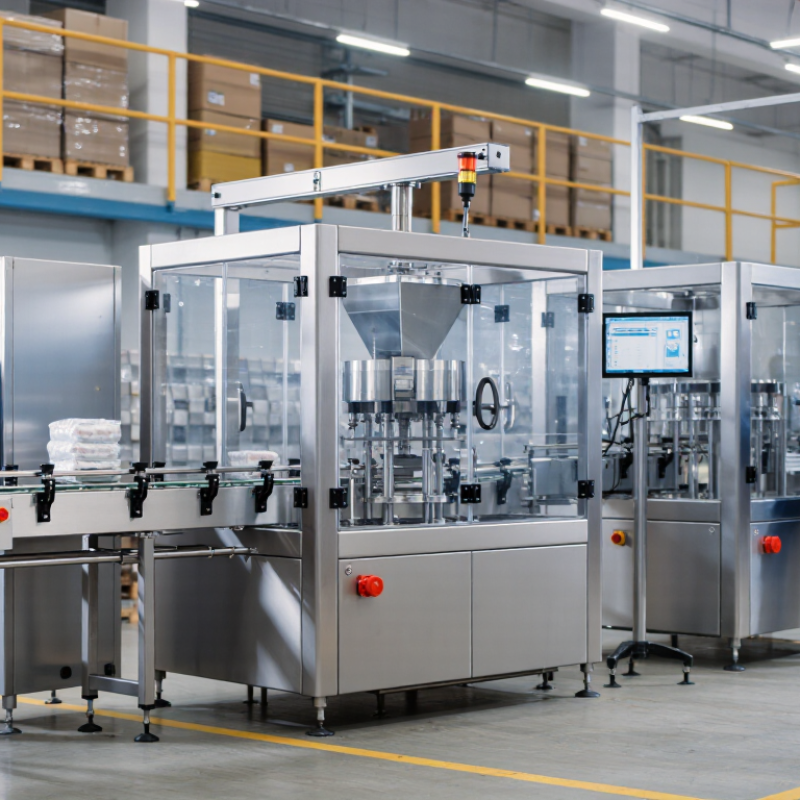
Start with the product, not the machine. Define its size, weight, shape, surface, and sensitivity to pressure or heat. Record the packaging material, seal style, and required protection during storage and transport. A fragile product may need gentle handling, while a dusty product may require enclosed filling areas and easier cleaning access.
Set production goals with measurable figures. Estimate daily volume, peak demand, operating shifts, acceptable waste, and available labor. Include changeover time between product sizes. A target of 120 packs per minute may look impressive, but it can fail if operators need forty minutes between batches. Smaller equipment with steadier output may create better results. Measure twice.
In production reviews, I have seen teams overlook floor space, utility access, and maintenance clearance. Do not repeat that mistake. Map the machine footprint, operator movement, material flow, and cleaning route before requesting quotations. Test actual products and packaging materials whenever possible. Ask for evidence from similar applications, including seal quality, rejection rates, and service response times. Keep records of each trial. Early estimates are often wrong, and targets may need revision after testing. That is useful information, not failure. A reliable decision connects technical performance with everyday operating conditions.
| Packaging Machine Category | Best-Suited Products | Typical Production Range | Common Package Formats | Key Material Requirements | Typical Utility Requirements | Space Planning Range | Primary Production Goal | Priority When Selecting |
|---|---|---|---|---|---|---|---|---|
| Vertical Form-Fill-Seal Machine | Powders, granules, snacks, grains, pet food, and small hardware | Approximately 20–120 bags per minute, depending on product flow and bag size | Pillow bags, gusseted bags, and block-bottom bags | Heat-sealable roll film such as polyethylene-based laminates, polypropylene, or laminated barrier film | Electricity; compressed air is commonly required for sealing, cutting, or actuators | Approximately 2–6 m² for the main machine, excluding conveyors and auxiliary equipment | Automate repetitive bag forming, filling, and sealing operations | High |
| Horizontal Form-Fill-Seal Machine | Bars, biscuits, bakery products, medical items, and individually wrapped products | Approximately 30–200 packs per minute, depending on product dimensions and sealing method | Pillow packs, three-side-seal packs, and fin-seal packs | Heat-sealable flexible film with suitable seal strength, stiffness, and barrier properties | Electricity; compressed air may be needed for product handling and control components | Approximately 3–8 m², depending on infeed and discharge conveyor length | Increase wrapping speed while maintaining consistent seals and pack appearance | High |
| Premade Pouch Filling and Sealing Machine | Stand-up pouches, sauces, liquid foods, powders, and specialty products | Approximately 15–80 pouches per minute, depending on pouch size and filling method | Stand-up pouches, spouted pouches, zipper pouches, and flat pouches | Premade pouches with compatible dimensions, opening characteristics, and heat-sealing layers | Electricity; compressed air is commonly used for grippers, cylinders, and pouch handling | Approximately 4–10 m², including pouch loading and product discharge areas | Improve presentation quality and support multiple pouch styles | High |
| Cartoning Machine | Bottles, tubes, sachets, blister packs, and boxed consumer products | Approximately 30–250 cartons per minute, depending on carton size and loading pattern | Horizontal cartons, vertical cartons, tuck-end cartons, and glued cartons | Pre-cut paperboard cartons with suitable caliper, scoring, folding, and print specifications | Electricity; compressed air is frequently used for carton opening and product insertion | Approximately 5–15 m², depending on carton magazine and conveyor configuration | Reduce manual carton assembly and standardize secondary packaging | High |
| Case Packer | Cartons, bottles, cans, pouches, and shrink-wrapped multipacks | Approximately 5–30 cases per minute for many standard applications | RSC cases, wraparound cases, tray packs, and display cases | Corrugated cases with defined flute type, board strength, dimensions, and closure method | Electricity; compressed air is commonly required for case forming and product placement | Approximately 8–25 m², including case forming, loading, and sealing sections | Reduce labor in secondary packaging and improve case consistency | Medium |
| Lapping and Palletizing System | Finished cases, bags, trays, and heavy shipping units | Approximately 10–60 cases per minute, depending on payload, stacking pattern, and robot configuration | Layer-stacked pallets, column-stacked pallets, and mixed-load pallets | Stable corrugated cases or shipping bags with defined maximum compression and load limits | Electricity; compressed air may be required for grippers, clamps, and stretch-wrapping components | Approximately 15–50 m², including pallet storage, safety guarding, and wrapping equipment | Improve end-of-line throughput, pallet stability, and operator safety | Medium |
| Labeling Machine | Bottles, jars, cartons, containers, and packaged components | Approximately 30–300 units per minute, depending on label size, container shape, and placement accuracy | Front labels, wraparound labels, top labels, bottom labels, and dual-side labels | Pressure-sensitive labels or roll-fed labels matched to the container surface and adhesive requirements | Electricity; compressed air may be used for reject systems or positioning devices | Approximately 1–5 m², excluding upstream and downstream conveyors | Achieve repeatable label placement and improve product identification | Medium |
| Checkweigher and Metal Detection System | Food, pharmaceutical, chemical, and regulated packaged products | Approximately 60–400 units per minute, depending on product size and inspection sensitivity | Flexible packs, cartons, bottles, trays, and pouches | Packaging must remain stable on the conveyor and should not interfere with the selected detection technology | Electricity; compressed air is commonly used for automatic reject mechanisms | Approximately 1–4 m² per integrated inspection section | Verify product weight and detect specified foreign materials before shipment | High |
| Shrink-Wrapping Machine | Multipacks, retail bundles, cartons, trays, and promotional packs | Approximately 8–40 packs per minute, depending on pack dimensions and film type | Tray-and-shrink packs, film-only multipacks, and overwrapped bundles | Polyolefin, polyethylene, or other approved shrink film selected for required shrink ratio and strength | Electricity; heat energy is required for the sealing and shrinking stages | Approximately 4–12 m², including the infeed conveyor and heat tunnel | Bundle multiple units efficiently and provide tamper-evident outer protection | Low |
| Liquid Filling and Capping Machine | Beverages, household liquids, cosmetics, chemicals, and sauces | Approximately 20–200 containers per minute, depending on viscosity, fill volume, and number of filling heads | Bottles, jars, tubs, and containers with screw, snap, or press-on closures | Containers and closures must be dimensionally consistent and chemically compatible with the product | Electricity; compressed air is often used for valves, actuators, and cap handling | Approximately 4–15 m², excluding liquid supply tanks and product preparation equipment | Control fill accuracy, reduce spillage, and maintain hygienic production flow | High |
Related Posts
-

What is the Impact of Advanced Packaging Machines on Efficiency and Sustainability in Manufacturing?
-
Exploring Innovative Options for Advanced Packaging Equipment Solutions
-
Essential Export Certifications for Sourcing Packaging Equipment Globally
-
Unlocking the Specifications of Advanced Sealing Machines for Global Buyers
-

How to Choose the Right Packaging Equipment for Your Business Success
-

Finding Reliable Suppliers for Your Packaging Equipment Needs Globally