What Is a Sealing Machine and How Does It Work?
A sealing machine is the quiet checkpoint between a filled package and a product ready for shipment. It closes pouches, trays, bags, cartons, and containers by applying controlled heat, pressure, adhesive, or ultrasonic energy. The machine may look simple. Its settings are not. Temperature, dwell time, pressure, film structure, and line speed must work together.
PMMI reported that U.S. packaging machinery shipments reached approximately $10.7 billion in 2023, reflecting strong demand for automated and reliable packaging systems. Smithers also identifies flexible packaging as a major growth area, where seal integrity directly affects shelf life, leakage prevention, and consumer safety. These figures explain why a sealing machine is more than a closing device. It is a quality-control point.
Jorge Izquierdo, vice president of market development at PMMI, describes packaging machinery as “the backbone of modern packaging operations.” That observation fits sealing equipment particularly well. A weak seal can ruin an otherwise excellent product. A stable seal can protect it through filling, storage, transport, and retail handling.
The process is straightforward. A heated jaw or sealing bar softens the package layers. Pressure then bonds them together. Cooling stabilizes the joint. Some systems use continuous bands, vacuum chambers, induction coils, or ultrasonic tools instead.
Real production is less perfect. Dust, moisture, uneven films, and rushed settings can create hidden failures. Operators must inspect seal width, peel strength, and leakage. This article explains how a sealing machine works, where performance can decline, and why small adjustments often matter.
Sealing Machine Types: Heat, Induction, Ultrasonic, and Vacuum Systems
What Is a Sealing Machine and How Does It Work?
A sealing machine closes packaging by applying controlled heat, pressure, energy, or vacuum. Its purpose is practical: protect contents from moisture, oxygen, dust, and leakage. Grand View Research valued the global packaging machinery market at about USD 52.83 billion in 2023. It also projects a 4.7% compound annual growth rate through 2030. That expansion reflects stronger demand for consistent, automated packaging operations.
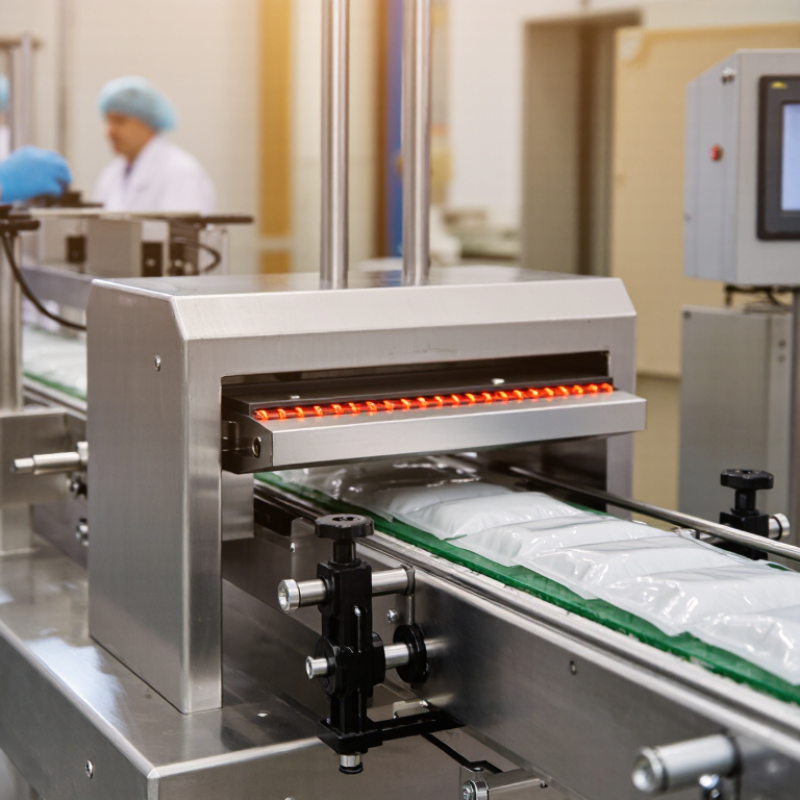
Heat sealers soften thermoplastic layers through heated jaws or continuous bands. They suit pouches, films, and laminated bags, but excessive heat can distort delicate materials. Induction sealers generate an electromagnetic field beneath a foil liner. The liner bonds to the container mouth without direct contact, creating a tamper-evident closure. Ultrasonic systems use high-frequency vibration to join packaging layers. They can reduce thermal damage and perform well around dust or product residue. However, setup quality still matters.
Vacuum sealers remove air before sealing, which helps slow oxidation and reduces package volume. Food processors often monitor residual oxygen, seal strength, and leakage rather than trusting appearance alone. A 2024 PMMI industry report highlights automation, labor constraints, and quality control as major packaging priorities. Those findings fit sealing equipment closely. Faster output is not automatically better. Poor calibration can produce attractive seals that fail during transport. Operators should validate temperature, dwell time, pressure, and material compatibility on the actual production line. Manual inspection still catches mistakes that sensors sometimes miss.
Key Components: Film Feeders, Heating Elements, Conveyors, and Controllers
A sealing machine closes filled packages by applying controlled heat, pressure, or both. Its performance depends on four linked components: film feeders, heating elements, conveyors, and controllers. The machine must move material steadily. Small timing errors can create wrinkles, weak seals, or product loss.
Film feeders unwind and guide rolls through tension sensors and forming parts. Excess tension stretches the film, while loose tension causes folds. Heating elements then soften compatible sealant layers at a controlled temperature. Seal quality depends on heat, dwell time, and pressure, not temperature alone. Conveyor belts keep pouches or trays aligned during sealing and cooling. Their speed must match the feeder and sealing jaws. Otherwise, packages may shift before the seal stabilizes.
Controllers coordinate these movements through sensors, programmable settings, and alarms. A practical plant-floor lesson is simple: calibration matters more than maximum speed. PMMI’s 2023 industry report valued U.S. packaging machinery shipments at approximately 10.2 billion dollars in 2022, reflecting strong demand for reliable automation. Grand View Research estimated the global packaging machinery market at 45.94 billion dollars in 2022 and projected a 5.5% compound annual growth rate through 2030. Those figures suggest growing investment, but they do not guarantee better seals. Operators still need routine checks for temperature drift, film alignment, belt wear, and sensor contamination. The “perfect” setting is rarely permanent. Ambient temperature and film batches can change results.
Heat-sealing temperature depends on the film structure and manufacturer specifications. The ranges shown are typical starting points for common thermoplastic films. In a sealing machine, the heating elements provide thermal energy, the controller regulates temperature and timing, the film feeders maintain material alignment, and the conveyor controls product movement through the sealing zone.
How a Sealing Machine Works: From Material Loading to Final Seal
A sealing machine closes bags, pouches, trays, or containers by joining compatible materials. The process begins when an operator loads the product and positions the package correctly. Guides keep the film straight, while sensors check its presence and alignment. Small errors matter. A tilted pouch can create wrinkles, weak edges, or trapped product near the sealing area.
After loading, the machine feeds the material toward the sealing station. Depending on the package, heated jaws, continuous bands, pressure, or ultrasonic energy may form the seal. Temperature, pressure, and dwell time must match the material structure. Too little heat can leave an open channel. Too much heat may distort the film. Experienced operators usually adjust one variable at a time, although production pressure sometimes encourages rushed changes.
At the sealing station, opposing surfaces press together for a controlled period. The machine then releases the package, allowing the seal to cool and stabilize. Some systems cut excess film during this movement. Sensors may reject packages with missing material, uneven seams, or incorrect positioning. A reliable check includes visual inspection and periodic strength testing. The seal may look acceptable but still fail under tension. This is where routine testing earns its place. Operators should record settings, material batches, and defects, then reconsider the process when results drift.
Industrial Performance: 20–100 Packs per Minute and 3–12 mm Seal Widths
What Is a Sealing Machine and How Does It Work?
A sealing machine closes flexible packages by applying controlled heat, pressure, and dwell time. In production, industrial models commonly handle 20–100 packs per minute. Seal widths usually range from 3–12 mm, depending on film structure and product needs. These figures are practical operating ranges, not guaranteed outputs. Speed drops when operators change formats, remove damaged packs, or adjust temperature.
The sealing jaws briefly compress the film while heating elements soften its inner layers. Cooling pressure then helps create a stable bond.
A 3 mm seal can save material, but it may offer less tolerance for wrinkles or contamination. A 12 mm seal provides a wider bonding area, although it can increase cycle time.
PMMI’s 2024 State of the Industry report identifies labor availability and automation as continuing drivers for packaging equipment investment. This supports faster sealing, but faster is not always better. A poorly aligned jaw can produce hundreds of weak seals before inspection catches the issue.
Tips: Validate speed with your actual film, pack weight, and product temperature. Check seal strength at regular intervals. ASTM F88/F88M is widely used for seal-strength testing. Keep records of jaw temperature, pressure, and dwell time. Small changes matter.
In my experience, the advertised 100 packs per minute often requires ideal spacing and consistent feeding. Real facilities may achieve less. That difference deserves honest testing before equipment selection.
Quality Control Standards: ASTM F88 Seal Strength and Leak Testing Methods
A sealing machine joins package layers through controlled heat, pressure, and dwell time. The seal may look smooth, yet appearance alone cannot confirm performance. ASTM F88/F88M provides a practical method for measuring seal strength in flexible barrier materials. It uses cut specimens, commonly one inch wide, pulled apart with a tensile tester. Technicians record the force and observe the failure mode.
The result shows how strongly the seal resists separation. It does not prove that the package is leak-free. Testing should control sealing temperature, jaw pressure, dwell time, specimen conditioning, and test speed. Even small changes can alter the result. A seal can peel cleanly, tear the film, or separate unevenly. Each pattern helps identify weak process settings.
Leak testing requires a complementary method. ASTM F2096 uses internal air pressure and water immersion to reveal gross leaks through bubbles. ASTM F1929 uses a dye solution to locate channels along porous or nonporous seals. ASTM F2338 applies vacuum decay and can detect pressure changes without dye. The correct method depends on package structure, expected defect size, and production risk.
Not every failure is dramatic. A tiny channel may pass visual inspection but still compromise protection. Reliable quality control therefore combines seal-strength data, leak results, equipment records, and representative sampling. Results should be reviewed by trained personnel, not accepted automatically. In practice, this is where testing becomes useful, though the process may still need adjustment.
What Is a Sealing Machine and How Does It Work? - Quality Control Standards: ASTM F88 Seal Strength and Leak Testing Methods
| Quality-Control Dimension | Description or Typical Data | Relevant Test or Control Point | Practical Interpretation |
|---|---|---|---|
| Sealing machine function | Applies controlled heat, pressure, and dwell time to join compatible packaging layers. | Process qualification and routine parameter monitoring | A stable combination of temperature, pressure, and time is required for repeatable seals. |
| Common sealing technologies | Constant-heat, impulse-heat, ultrasonic, induction, and hot-bar systems. | Select a method according to the package structure and sealant layer. | The equipment must be compatible with the material, thickness, line speed, and package format. |
| Primary sealing variables | Jaw or bar temperature, contact pressure, dwell time, cooling time, alignment, and cleanliness. | Record actual settings and verify them at defined intervals. | Variation in any major variable can change seal strength or create channels and wrinkles. |
| ASTM F88/F88M purpose | Measures the force required to separate a flexible package seal under specified test conditions. | Seal strength testing | The result is a quantitative measure of seal-opening resistance, not a direct leak rate. |
| ASTM F88 specimen | A strip is cut across the seal, commonly 1 inch or 25.4 mm wide, unless the approved procedure specifies another width. | Prepare specimens from representative packages and avoid damaged or visibly defective areas unless they are being investigated. | Consistent specimen width is essential for comparable force-per-width results. |
| ASTM F88 test setup | The sealed layers are clamped in opposing grips and pulled apart at a controlled rate. | Use calibrated tensile-test equipment and documented specimen orientation. | Grip alignment, jaw separation rate, and specimen handling can affect the measured result. |
| ASTM F88 reported result | Usually reported as force per unit seal width, such as N/25.4 mm or N/mm, together with the failure mode. | Report average, variation, specimen count, test conditions, and seal-opening behavior. | Higher force does not automatically mean better package performance if the package is difficult to open or the sealant is damaged. |
| ASTM F88 failure modes | Examples include adhesive failure, cohesive failure, sealant tearing, delamination, and substrate failure. | Visually classify the opened seal after each test. | Failure mode helps identify whether the issue is related to bonding, material integrity, contamination, or excessive heat. |
| ASTM F88 acceptance criteria | ASTM F88 describes the test method but does not establish one universal pass/fail seal-strength value. | Set limits through product specifications, validation studies, regulatory requirements, and risk assessment. | Acceptance limits must be appropriate for the package design and intended use. |
| ASTM F2096 gross leak test | Internal pressurization and immersion are used to detect gross leaks by observing bubbles. | Useful for packages that can be safely pressurized and immersed. | The method detects gross leaks and is not intended to quantify every small leak or establish a universal leak-size limit. |
| ASTM F2338 vacuum-decay testing | A package is placed in a sealed chamber, and pressure change during vacuum exposure is measured. | Non-destructive leak detection for suitable package types and validated chamber settings. | Results depend on chamber design, package volume, test time, temperature, and the validated leak threshold. |
| ASTM F1929 dye penetration | A penetrating dye is applied to the edge of a porous package seal to reveal channels or continuous leaks. | Destructive, localized seal-channel detection for appropriate porous materials. | The method is sensitive to dye contact, observation time, seal geometry, and operator technique. |
| ASTM F3039 dye penetration | A dye solution is used to detect leaks in nonporous packaging seals. | Destructive inspection of selected seal areas or package configurations. | It indicates visible dye migration through a leak path; it does not replace a validated quantitative leak test when one is required. |
| Seal contamination control | Powders, liquids, product residue, wrinkles, folds, and particles can reduce seal integrity. | Inspect seal surfaces and verify forming, filling, and closing controls. | A strong average seal result may not reveal isolated channels caused by local contamination. |
| Calibration and verification | Temperature sensors, pressure controls, timers, tensile testers, vacuum systems, and measurement devices require documented verification. | Use traceable standards and retain calibration records according to the quality system. | Unverified equipment can create false pass or fail results even when the process appears stable. |
| Recommended quality-control sequence | Check visual appearance, measure seal strength, perform a suitable leak test, and review trends. | Use a documented sampling plan and predefined acceptance criteria. | Combining destructive strength testing with leak testing provides a more complete assessment than either test alone. |
Related Posts
-
10 Sealing Machine Buying Tips for Global Buyers
-
Top Sealing Machine Manufacturers for Global Buyers
-

Sealing Machine Market Trends for 2025 and Insights into the Future of Packaging Solutions
-
Ultimate Guide to Choosing the Right Sealing Machine for Your Business Needs
-
Unlocking the Specifications of Advanced Sealing Machines for Global Buyers
-
How to Select Reliable Manufacturers for Food Tray Sealing Machines 7 Expert Tips