Top 10 Filling Machine Manufacturers in China
Selecting a supplier from the Top 10 Filling Machine Manufacturers in China requires more than comparing prices. Buyers need to match equipment with product viscosity, container shape, line speed, cleaning needs, and available floor space. A machine filling clear water into narrow bottles faces different demands from one handling thick sauce or shampoo. Small details matter.
MarketsandMarkets estimated the global filling machines market at USD 7.1 billion in 2022 and projected it to reach USD 9.1 billion by 2027, a forecast compound annual growth rate of 5.1%. These figures provide useful context, not a guarantee of future sales or a China-specific market measurement. The report’s broad categories also remind buyers that “filling machine” covers different technologies and end-use industries.
China’s manufacturers serve varied production needs, from compact semi-automatic units to integrated lines with capping and labeling equipment. Yet a polished brochure cannot show how quickly a valve can be cleaned, whether spare parts are readily available, or how consistently the machine handles a real product. Those questions deserve careful testing. A factory trial, sample filling run, and review of service arrangements can reveal practical differences between suppliers. Specifications help, but they are not the whole story. This guide introduces ten manufacturers and the factors buyers can use to assess their equipment, experience, and support with greater confidence.
China’s Filling Machine Industry and Its Main Product Categories
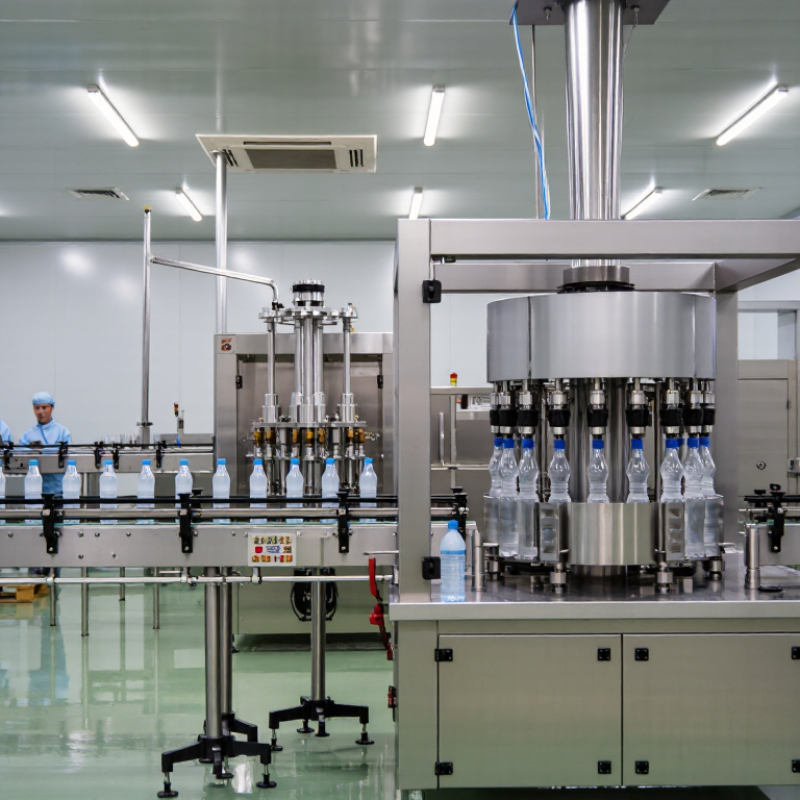
China’s filling machine industry has grown around a wide range of production needs, from small workshops to high-output factories. Equipment is commonly designed for liquids, pastes, powders, and granules. Each material behaves differently. A thin beverage runs quickly, while a thick cream may cling to a nozzle and leave uneven fills. Container shape matters too: a narrow bottle needs different handling from a wide-mouth jar.
Liquid filling machines often use gravity, pumps, or flow meters, depending on the product and required accuracy. Piston fillers suit thicker sauces and creams, while auger systems meter powders into bags or jars. Granule fillers handle products such as seeds or snack pieces. Details matter. Buyers should check fill range, changeover time, cleaning access, and how the machine handles the actual container, not just a sample shown in a catalog.
Across China, suppliers offer manual, semi-automatic, and automatic lines, with options for capping, labeling, and conveyor integration. Automation can reduce repetitive work, but a faster rated speed does not guarantee better output. Product foam, temperature shifts, and inconsistent bottle spacing can slow a real line. This distinction is easy to overlook. Factory trials with the intended material can reveal issues that a specification sheet will not. Many purchasing decisions still rely too heavily on headline speed.
China’s Filling Machine Industry: Main Product Categories
A classification of common filling-machine categories by the product forms they are designed to handle.
Each bar represents one category in this overview, not market share, production volume, or a ranking. Filling method and machine configuration depend on product properties and packaging requirements.
Criteria for Comparing Leading Chinese Filling Machine Manufacturers
Comparing Chinese filling machine manufacturers requires more than matching quoted prices and advertised speeds. Start with the product: its viscosity, foaming tendency, temperature, and particle size affect the filling method. Ask for a trial using your actual liquid and container, not a convenient substitute. Watch several cycles. Record fill-weight variation, drips, changeover time, and rejected bottles under realistic operating conditions. A high-speed figure means little if operators must slow the line to prevent spills.
Check whether the machine handles your container sizes and can connect with existing conveyors, cappers, and labelers. Inspect wetted parts, seals, and cleaning access; request material documentation where product contact matters. Ask how calibration works and whether common adjustments require tools. Evidence matters. Review test records, electrical drawings, operating manuals, and spare-parts lists before comparing proposals. Clarify response times, technician availability, warranty coverage, and training. A polished demonstration is useful, but it cannot reveal every production issue. Even experienced buyers can overlook routine cleaning time, so include operators in the assessment and note what still feels uncertain.
Top 10 Filling Machine Manufacturers in China - Criteria for Comparing Leading Chinese Filling Machine Manufacturers
| Comparison Criterion | Suggested Weight | What to Compare | Evidence to Request |
|---|---|---|---|
| Product and container compatibility | 15% | Compatibility with the product’s viscosity, foaming behavior, temperature, container material, shape, and size. | Written product and container specifications; sample-container test results; confirmation of any required product-contact components. |
| Filling technology and operating range | 12% | Suitability of the filling method, such as gravity, piston, pump, or flow-meter filling, for the product and required fill range. | Machine datasheet identifying the filling principle, supported fill-volume range, product limitations, and available nozzle options. |
| Production speed and capacity | 12% | Containers filled per minute under clearly stated conditions, including container size, number of filling heads, and product characteristics. | Factory acceptance-test results or a witnessed production trial using representative containers and product, with test conditions recorded. |
| Fill accuracy and repeatability | 12% | Variation between fills across the specified operating range; compare results using the same product, volume, and test method. | Documented test protocol, sample size, measurement method, and results. Confirm whether figures are stated as mass or volume and under what conditions. |
| Product-contact materials and cleanability | 10% | Material suitability, accessible cleaning surfaces, drainage, and compatibility with the product and cleaning or sanitation process. | Bill of materials and material certificates where applicable; cleaning instructions; confirmation that food-contact requirements relevant to the destination market are addressed. |
| Changeover and format flexibility | 8% | Time and effort needed to change container formats, fill volumes, or product recipes; assess whether change parts or tools are required. | Changeover procedure, list and cost of format parts, and a timed demonstration using the buyer’s intended formats. |
| Controls and line integration | 8% | Operator interface, recipe management, alarms, safety features, and compatibility with upstream or downstream equipment. | Control-system specification, electrical drawings, interface details, and a demonstration of relevant line signals and operating modes. |
| Quality management and applicable compliance | 8% | Documented manufacturing controls and the standards or regulations applicable to the machine, product, and destination market. | Current certificates with scope and issuing body; declarations or technical documents relevant to the intended market. Verify applicability rather than relying on logo claims. |
| Installation, training, and after-sales support | 8% | Availability of installation assistance, operator and maintenance training, troubleshooting, spare parts, and response arrangements. | Written service terms, support hours and channels, spare-parts list, training plan, and references for comparable installations where available. |
| Total cost and lifecycle considerations | 7% | Total ownership cost, including machine price, options, shipping, installation, consumables, maintenance, and expected change parts. | Itemized quotation, delivery and warranty terms, recommended-spares schedule, and clearly identified exclusions or recurring costs. |
Suggested weights are a comparison framework, not manufacturer performance ratings. Apply the same test conditions and evidence requirements to each supplier; adjust the weights to match the product, line, and destination-market requirements.
Profiles of 10 Major Filling Machine Manufacturers in China
China’s filling-machine sector serves beverage, food, cosmetic, and household-product factories. The profiles below focus on practical capabilities rather than company names. They are capability-based descriptions, not verified claims about individual suppliers.
One manufacturer focuses on liquid lines, with stainless-steel contact parts and adjustable nozzles.
Another builds compact systems for small workshops. Space matters.
A third supplies rotary fillers for high-volume beverage production, while a fourth specializes in thick products such as sauces and creams. Its pumps must handle changing viscosity.
A fifth combines filling and capping, reducing transfers between stations.
A sixth manufacturer develops powder-filling equipment, with dust-control features around the dosing area.
A seventh offers piston fillers for measured portions.
An eighth makes gravity-based systems for free-flowing liquids.
A ninth designs configurable lines, allowing factories to add conveyors or labelers later.
A tenth provides custom integration for unusual container shapes. That can help, but custom work may extend commissioning.
Buyers should compare fill accuracy, changeover time, cleaning access, and available service support. Ask for a product trial using actual containers and material; brochures alone reveal little. These details are easy to overlook.
Filling Technologies, Packaging Formats, and Industries Served
China’s filling-machine manufacturers serve liquids, powders, granules, and viscous products. Volumetric systems suit repeatable doses; piston fillers handle thicker sauces and creams. Flow meters can support precise liquid filling. Rotary machines fit high-output lines, while linear models offer easier changeovers. Container shape matters, too. Neck finish, cap type, pouch seal, and bottle stability all affect performance. Small details matter.
Food and beverage lines often need washdown-friendly equipment and fast format changes. Cosmetics producers may prioritize gentle handling and clean presentation. Pharmaceutical applications demand tightly controlled dosing and traceable processes. FAO’s 2019 State of Food and Agriculture report estimates that 14% of food is lost between harvest and retail. Accurate filling cannot prevent all losses, but it can help limit avoidable rejects and giveaway. OECD’s Global Plastics Outlook 2022 reports that packaging accounted for about 40% of plastic waste in 2019. That figure gives buyers another reason to assess container weight and material use alongside filling accuracy. A speed claim can look impressive on paper. Ask how it performs with your actual product, container, and changeover schedule. Even careful specifications can miss shop-floor realities.
How to Evaluate a Manufacturer for Your Production Needs
Top 10 Filling Machine Manufacturers in China: How to Evaluate a Manufacturer for Your Production Needs
Choosing a filling machine manufacturer starts with your product, not a brochure. Ask for trials using your actual liquid, container, and cap. A thin beverage and a thick sauce behave very differently. Check the quoted speed against your target fill volume, then ask how accuracy changes at that speed. Request details on changeover time, cleaning access, and contact parts. A machine that fills quickly but takes hours to clean may slow the whole shift. The Deloitte and Manufacturing Institute 2024 study estimated that up to 1.9 million U.S. manufacturing jobs could go unfilled by 2033. That makes clear manuals, operator training, and responsive technical support practical evaluation points—not extras.
Tips: Bring sample containers and product to a factory test. Record fill weights, rejected units, and changeover time. Ask who supplies wear parts, how quickly they ship, and what remote support includes. Verify the machine can connect with your existing conveyor and labeling equipment. A polished demonstration can mislead; insist on a written acceptance test using agreed production conditions. If possible, speak with a customer running a similar product. Even then, fit is not guaranteed. Your own trial may reveal an inconvenient detail the specification sheet missed.
Related Posts
-
Ultimate Guide to Choosing the Right Sealing Machine for Your Business Needs
-
Exploring Innovative Alternatives to Best Packaging Machinery for Your Business
-
10 Essential Tips for Using Your Heat Sealing Machine Effectively?
-
How to Choose the Right Packaging Equipment for Your Business Needs
-
Why Choose a Tray Sealing Machine for Your Packaging Needs?
-
How to Choose the Right Packaging Equipment for Your Business?